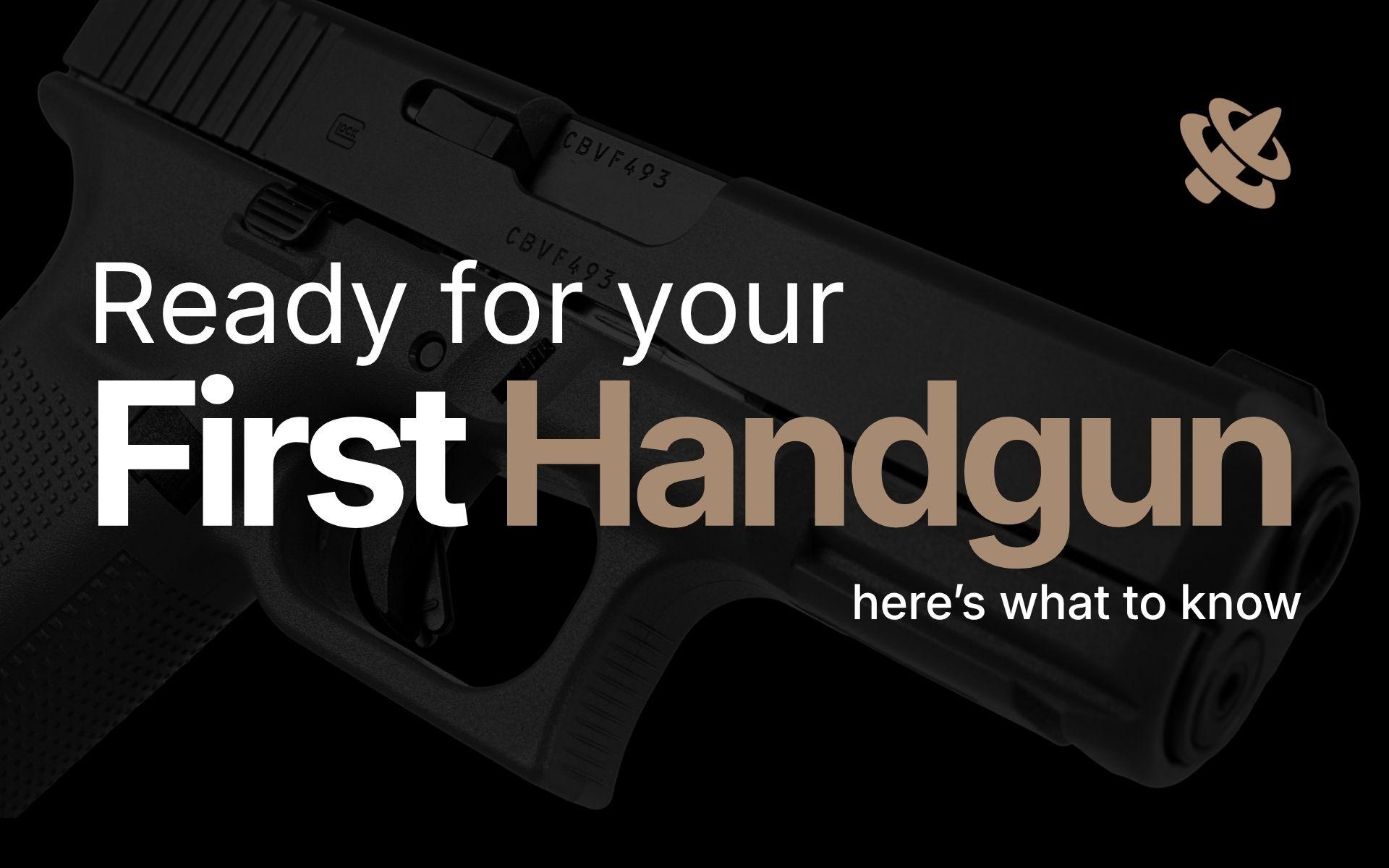
Choosing your first self-defense handgun is a personal decision, and there's no single "best" gun for everyone. The right choice depends on your hand size, how much you'll train, and how you'll carry or store it. Instead of naming one magic model, this guide walks through the criteria that actually matter so you can choose confidently.
First Principles: Fit, Reliability, Trainability
Before specs, three things separate a good first handgun from a frustrating one:
- Fit — It should feel comfortable in your hand, let you reach the trigger and controls, and point naturally. A gun that fits you is a gun you'll shoot well.
- Reliability — A defensive gun must go bang every time. Established models from reputable manufacturers with long track records beat bargain unknowns.
- Trainability — You'll only be as good as your practice. A handgun that's pleasant to shoot is one you'll actually train with.
A gun you enjoy shooting and practice with regularly will serve you far better than a "perfect on paper" model that sits in a drawer.
Caliber: Why 9mm Is the Common Starting Point
For most new shooters, 9mm is the default recommendation, and for good reasons:
- Manageable recoil that's easier to control and learn on.
- Affordable, widely available ammo — so you'll train more.
- Higher capacity than larger calibers in a similar-size gun.
- Effective modern defensive ammunition.
Larger calibers like .40 S&W or .45 ACP are capable but recoil more, which can slow a beginner's progress. Smaller calibers like .380 ACP are easier to carry but offer less. For a first do-it-all defensive handgun, 9mm hits the sweet spot. To understand the numbers, see gun calibers explained.
Size: Match It to How You'll Use It
| Size class | Best for | Trade-off |
|---|---|---|
| Full-size | Home defense, range, easiest to shoot | Harder to conceal |
| Compact | Versatile—carry and home | Slight compromise both ways |
| Subcompact / micro | Deep concealment | Snappier recoil, harder for beginners |
A common first-gun recommendation is a compact or full-size striker-fired 9mm—big enough to shoot well and learn on, not so big it's impractical. If concealed carry is your main goal, a compact is a flexible starting point.
Action Type: Striker-Fired Simplicity
Most modern defensive pistols are striker-fired—simple, consistent trigger pull, few external controls. They're beginner-friendly compared to traditional double-action/single-action hammer guns. If you prefer maximum mechanical simplicity, some beginners also consider a revolver; see pistol vs. revolver to weigh that choice.
Features That Actually Matter for Beginners
- Good factory sights (consider night sights or an optics-ready slide).
- Reasonable, consistent trigger.
- Ambidextrous or reversible controls if you're left-handed.
- Adjustable backstraps to dial in fit.
- A strong aftermarket for holsters, magazines, and parts.
Mistakes First-Time Buyers Make
- Buying the smallest gun "for concealment"—micro pistols are the hardest to shoot well.
- Chasing a big caliber to feel powerful, then flinching from recoil.
- Skipping training. The gun is 20% of the equation; your skill is the rest.
- Buying online without handling one first. Whenever possible, hold (and ideally rent/shoot) a model before buying.
- Overpaying new when a quality used example exists. A gently used, proven model can be a smart first buy—see new vs. used guns and our used-gun inspection checklist.
Don't Forget the Essentials Beyond the Gun
Budget for the whole system: a quality holster, extra magazines, defensive and practice ammo, eye and ear protection, secure storage (safe or lockbox), and—most important—professional training. Note that under federal law you must be at least 21 to buy a handgun from a licensed dealer, and check your state and local laws on purchase, storage, and carry before you buy.
Frequently Asked Questions
What is the best handgun caliber for a beginner? 9mm is the most common recommendation—manageable recoil, affordable ammo, good capacity, and effective defensive loads.
Should my first handgun be a revolver or a semi-auto? Most beginners do well with a striker-fired 9mm semi-auto for capacity and ease of shooting, but a revolver offers mechanical simplicity. It comes down to fit and preference.
What size handgun should I buy first? A compact or full-size is usually easier to learn on than a tiny subcompact, which has snappier recoil.
Can I buy my first handgun online? Yes—it ships to a licensed dealer near you for the background check. You must be at least 21 to buy a handgun from a licensed dealer. Try to handle the model in person first. See how to buy a used gun online.
How much should I spend on a first handgun? Quality, reliable models exist across a wide price range; a proven used example can stretch your budget further.
The Bottom Line
The best first handgun is the reliable one that fits your hand and that you'll actually train with—most often a compact or full-size 9mm from a reputable maker. Handle a few, then browse handguns on BallisticBid to compare options and prices.
This article is general educational information, not self-defense, legal, or financial advice. Always seek qualified, hands-on training and follow all federal, state, and local firearm laws.