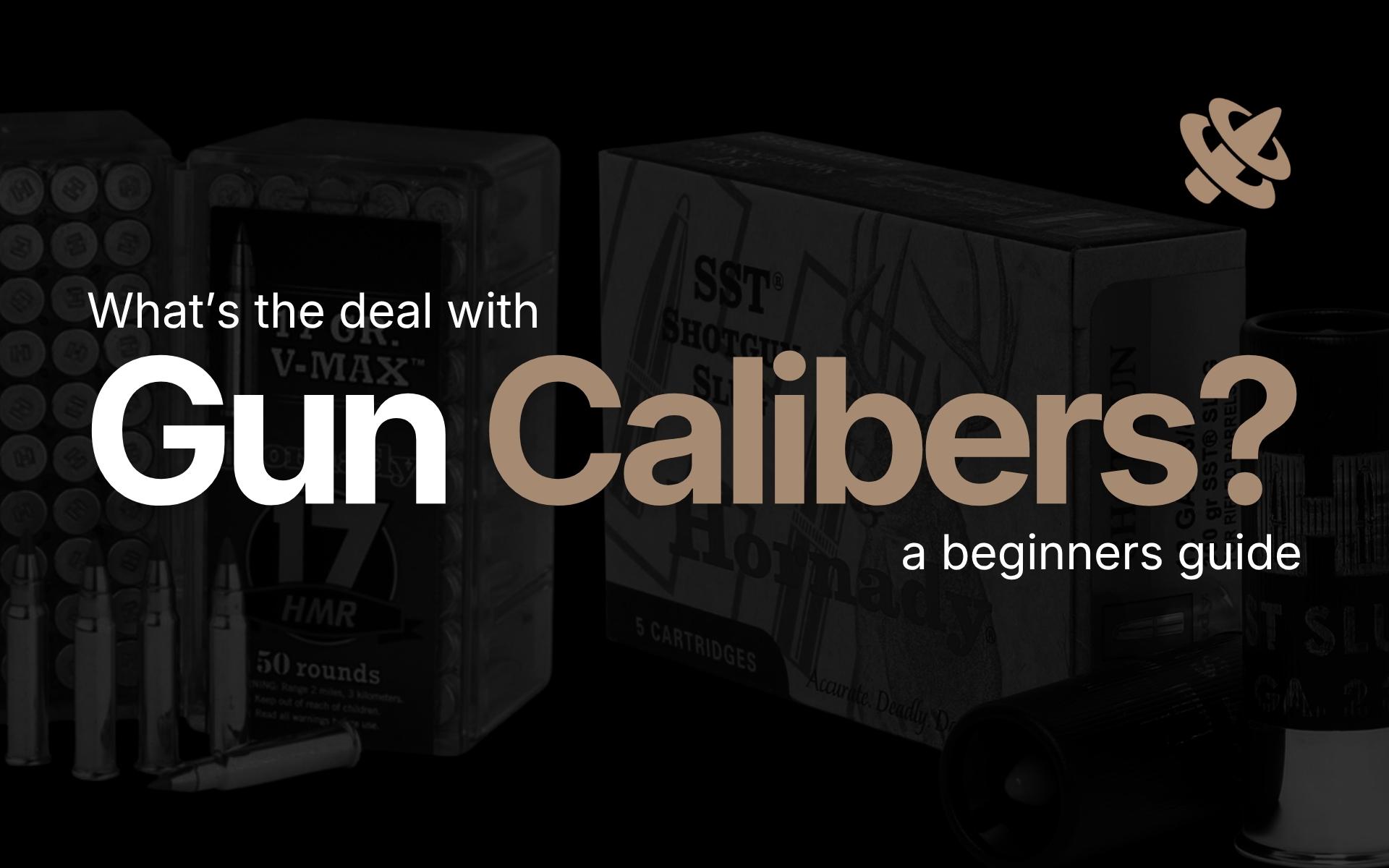
If you're new to firearms, the numbers can be baffling: 9mm, .40, .45, .223, .308, 12-gauge. What do they mean, and which do you need? This guide demystifies caliber so you can shop and talk shop with confidence.
What Does "Caliber" Actually Mean?
Caliber refers to the diameter of a firearm's bore (and the bullet that fits it), usually measured in inches (like .45, meaning 0.45") or millimeters (like 9mm). It's a rough description of cartridge size—but two cartridges can share a diameter and be very different, so the full cartridge name matters (e.g., ".357 Magnum" vs ".38 Special").
A quick vocabulary note: a cartridge (or "round") is the complete unit—case, primer, powder, and bullet. The bullet is just the projectile. "Caliber" loosely names the cartridge family.
Common Handgun Calibers
| Caliber | Recoil | Typical use | Notes |
|---|---|---|---|
| .22 LR | Very low | Training, plinking, small game | Cheap, fun, low-stress to learn on |
| .380 ACP | Low | Compact concealed carry | Easy to carry, modest power |
| 9mm | Moderate | Defense, carry, range | The popular all-rounder—affordable, capable |
| .40 S&W | Higher | Defense | More recoil than 9mm |
| .45 ACP | Higher, "push" | Defense | Large, heavy bullet; lower capacity |
| .38 Special / .357 Magnum | Moderate / High | Revolvers | .357 chambers can also fire .38 |
For most new shooters, 9mm balances recoil, cost, capacity, and effectiveness—which is why it's the common recommendation for a first self-defense handgun.
Common Rifle Calibers
| Caliber | Typical use | Notes |
|---|---|---|
| .22 LR | Training, small game | Same friendly rimfire round as the pistol |
| .223 / 5.56 NATO | AR-15s, defense, varmint | Light recoil, high velocity |
| .308 / 7.62 NATO | Hunting, long range | More power and recoil |
| 6.5 Creedmoor | Long-range precision | Popular for accuracy |
| .30-06 / .30-30 | Hunting | Classic big-game cartridges |
Shotgun Gauges (a Different System)
Shotguns use gauge, not caliber, and it works backwards—a smaller gauge number means a larger bore:
- 12-gauge — the most common; powerful, versatile (defense, hunting, sport).
- 20-gauge — lighter recoil, popular with smaller shooters and new hunters.
- .410 bore — the exception that uses caliber-style naming; small and light.
How to Choose the Right Caliber
Match the cartridge to the job:
- Learning / practice / plinking: .22 LR—cheap and low-recoil, so you shoot more.
- Self-defense handgun: 9mm is the popular balance of control, cost, and effectiveness.
- Home defense: depends on the platform—see best gun for home defense.
- Hunting: match the cartridge to the game and local regulations.
- Range / sport: whatever's fun and affordable to feed.
Two practical tips: train with what you'll carry, and factor in ammo cost and availability—the cheapest caliber to shoot is the one you'll actually practice with.
Frequently Asked Questions
What is the most common gun caliber? 9mm is the most popular handgun caliber in the U.S.; .223/5.56 is the most common modern rifle caliber; 12-gauge is the most common shotgun gauge.
Is a bigger caliber always better? No. Bigger calibers mean more recoil, lower capacity, and pricier ammo. Shot placement and training matter more than raw size.
What caliber is best for a beginner? .22 LR for pure learning; 9mm for a do-it-all defensive handgun.
Why are shotgun gauges "backwards"? Gauge is based on an old measurement (how many lead balls of that bore diameter make a pound), so a smaller number means a bigger bore.
The Bottom Line
Caliber describes cartridge size, and the right one depends on your goal—.22 LR to learn, 9mm for defense, and gauge/rifle calibers matched to the task. Now that the numbers make sense, browse firearms by caliber on BallisticBid.
This article is general educational information, not legal advice. Always follow safe handling practices and your local firearm and ammunition laws.